
Spherical Roller Bearing Selection Guide: Series, Cage, Clearance & Bore Type
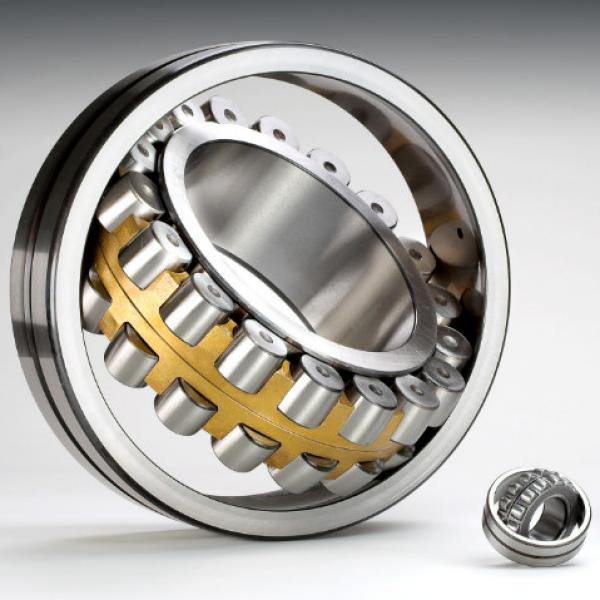
A spherical roller bearing designation looks dense — 22314CA/W33 C3 K says almost everything about the bearing — but each element answers one selection question. This guide walks through those questions in the order engineers ask them, using the NKEN range (222, 223, 230, 231, 232, 240 and 241 series, 470 models) as the reference.
Step 1 — Start from load, speed and misalignment
Spherical roller bearings are chosen when heavy radial load (often with axial load in both directions) combines with shaft misalignment — crushers, mills, gearboxes, screens. The sphered outer raceway lets the bearing self-align, so the first decision is the size series, which trades load capacity against speed: the 222 series is the general-purpose medium series; 223 is the wider, heavier series for shock duty at the same bore; the wide 230, 231 and 232 series serve large shafts and mill duty; 240 and 241 are the widest, slowest, highest-capacity series. Check the published dynamic (Cr) and static (C0r) ratings in the model table against your calculated loads — every NKEN model lists both.
Step 2 — Cage: CA or CC
The standard NKEN supply is the CA execution — a machined brass cage — which is the robust choice for shock load, vibration and high temperature, and the execution we recommend for vibrating screens and crushers. CC-type executions with pressed-steel cages serve lighter, faster, cleaner duty. If the designation you are replacing carries a cage suffix, match it; if it does not, tell us the machine and we specify the cage in the quotation.
Step 3 — Lubrication: specify W33 where relubrication matters
W33 adds a lubrication groove and three holes in the outer ring, so grease or oil reaches the rolling contacts in service. On sealed-for-life, slow, clean positions it adds little; on plant that is greased on a route — crushers, mills, screens, paper machines — it is close to essential, and it is part of the standard NKEN execution for those industries.
Step 4 — Clearance: normal, C3 or C4
Internal clearance is consumed by press fits and by temperature gradients between the rings. Interference fits on both rings, or a hot shaft in a cool housing, point to C3; vibrating screens and similarly hot, heavily fitted positions often run C4. Ordering normal clearance for a screen is a classic early-failure cause. The clearance belongs in the designation you send us — if the old bearing is unmarked, tell us the machine type and fitting arrangement and we confirm the clearance with the quote.
Step 5 — Bore: cylindrical, or tapered K with a sleeve
A cylindrical bore mounts directly on the shaft with an interference fit. A K tapered bore (1:12, or 1:30 on the 240/241 series — the K30 suffix) mounts on an adapter sleeve: easier to fit and remove on large shafts, and the drive-up distance sets the clearance reduction precisely. NKEN supplies tapered-bore bearings with adapter or withdrawal sleeves as a set — state the shaft size or the sleeve designation (e.g. H 314) in your inquiry.
Worked example: reading 22314CA/W33
22314CA/W33 is a 223-series bearing, 70 mm bore × 150 mm OD × 51 mm wide, CA brass cage, W33 lubrication features, rated Cr 300.8 kN / C0r 372.9 kN — a regular NKEN stock line for crusher and screen duty. Add “C3” for a vibrating screen, or “K” plus a sleeve designation for sleeve mounting, and the designation is complete enough for an exact quotation.
Next step: check your size in the spherical roller model table — all 470 models with dimensions and ratings — or send the full designation from the bearing you are replacing. For ordering by an existing number in general, see our cross-reference guide.