
Truck Hub Unit Cross-Reference & Replacement Guide
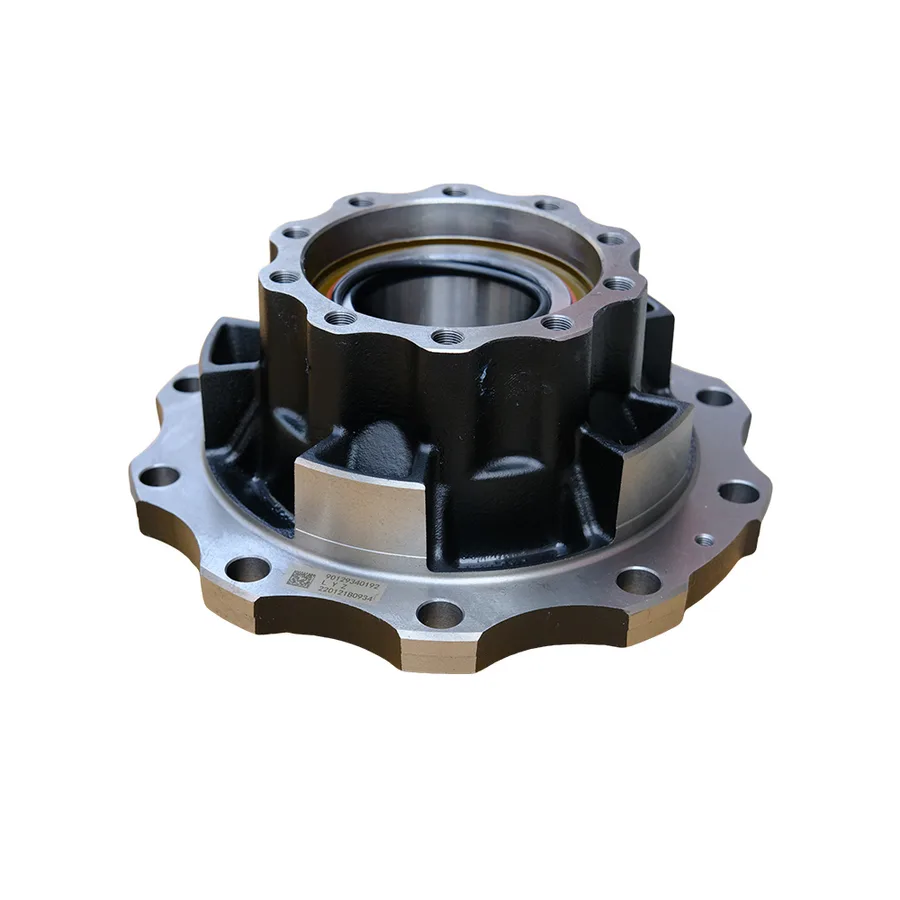
Truck wheel-end parts are replaced by identification, not by measurement alone: the same axle family can carry several hub executions, and the difference is in the flange, the seals and the ABS tone ring. This guide shows how hub units, SET tapered kits and DAC wheel bearings are cross-referenced, and what to send so the replacement is confirmed before it ships.
Three product forms, three identification routes
Hub units are sealed, greased-for-life assemblies — bearing, flange and, where fitted, ABS tone ring in one unit. Identify them by the unit number marked on the old unit, or by the vehicle model, axle position and year. SET kits are matched tapered cone and cup pairs for axles and trailers: identify them by the SET number if you buy in sets, or by the individual cone and cup numbers — for example, cone LM67048 with cup LM67010 is SET6. DAC bearings are double-row wheel bearings identified by their designation, which encodes the boundary dimensions directly.
What a cross-reference actually checks
A unit number match is the start, not the whole check. Before dispatch, NKEN confirms the execution details that decide fitment: bore, outside diameter and width; flange bolt pattern and pilot; seal arrangement; and whether an ABS tone ring is fitted and of which type. The NKEN hub library holds 194 references with full dimensions and cross-reference numbers, published on the truck wheel hub units page, and the SET range runs to 311 kits indexed by SET and cone/cup numbers. If a position cannot be matched exactly, it is flagged at quotation — never substituted silently.
Send these details for a one-step match
- The unit number from the old hub unit, or the cone/cup numbers from the axle set — exactly as marked, suffixes included.
- The vehicle application: model, axle (front/rear/trailer) and year, as a cross-check on the number.
- Whether the unit carries an ABS tone ring, if the number does not make it clear.
- Quantity — single unit, axle pair, or distributor stock — and the delivery destination.
Replacement practice that protects the new unit
Hub units and axle sets work as systems: replace both sides of an axle with the same execution where the service schedule allows, set tapered pairs to the specified preload or end-float rather than by feel, and treat a damaged seal or a tone-ring fault code as a unit replacement, not a cleaning job. For distributors, the same NKEN range can be supplied under your own brand — laser-marked units in your colour boxes — through our OEM programme.
Next step: look up your number on the hub units page or in the tapered SET tables, or send the number through the inquiry form and we confirm the match with price and stock. The general method behind all of this is in our bearing cross-reference guide.